

Blog

Hyundai Tucson vs. Santa Fe: Which SUV Fits Your Needs?

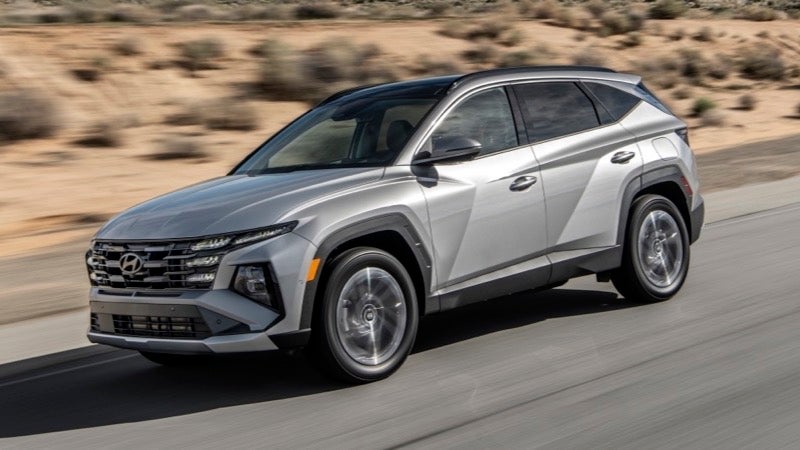
Silver Hyundai Tucson compact SUV driving on a highway

Do you need a third row, or do you just need a bit more room than you have now? That one question settles most of the Hyundai Tucson vs. Santa Fe debate. The Tucson is Hyundai's compact five-passenger SUV. The Santa Fe is its midsize three-row model. Both offer hybrid power, available all-wheel drive, and the same long warranty coverage. At Bentley Hyundai, we see shoppers weigh these two all the time. This guide breaks down towing, space, fuel economy, and tech so you can decide with confidence.
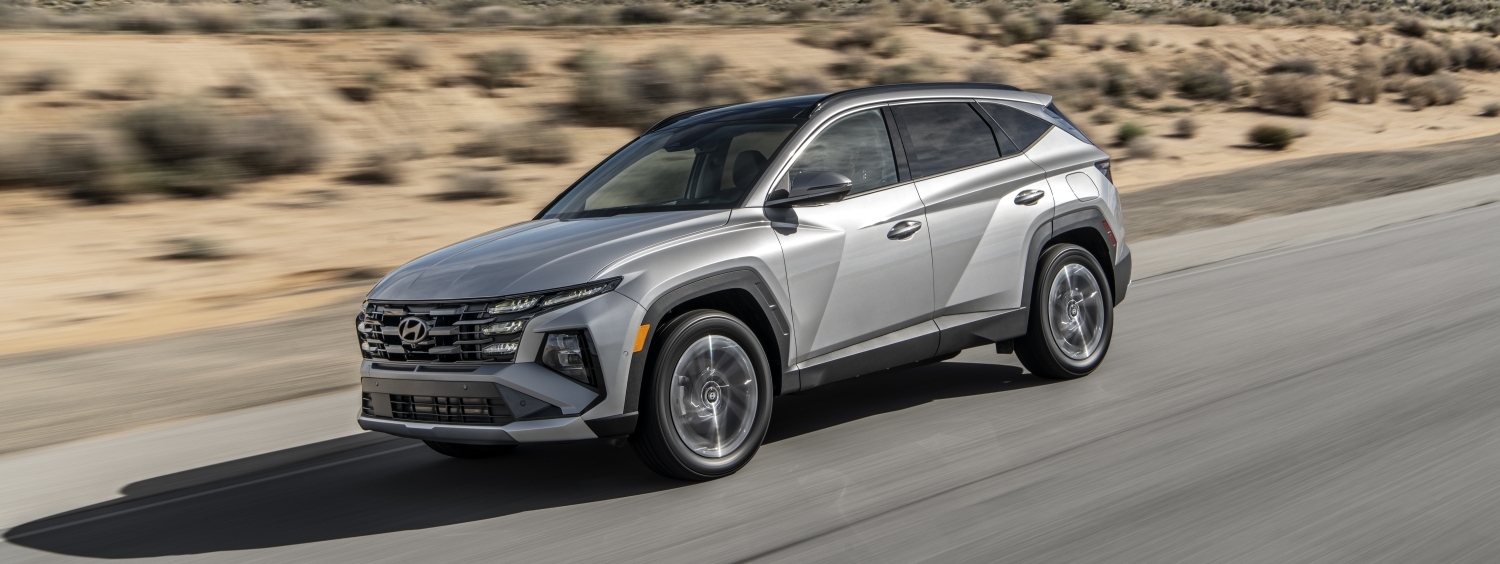
Silver Hyundai Tucson compact SUV driving on a desert highway
The Hyundai Tucson seats five and offers gas, hybrid, and plug-in hybrid power. Photo: Hyundai Motor America.

Quick Comparison: Tucson vs. Santa Fe

Here's how the two SUVs line up on the numbers that matter most. Every figure comes from Hyundai's published specifications.

FeatureHyundai TucsonHyundai Santa Fe
Size classCompact SUVMidsize three-row SUV
Seating5Up to 7 (6 with captain's chairs)
Gas engine2.5L four-cylinder, 187 hp2.5L turbo four-cylinder, 277 hp
Electrified optionsHybrid (231 hp) and Plug-in Hybrid (268 hp)Hybrid (231 hp)
Best EPA combined ratingUp to 38 mpg (Hybrid)Up to 36 mpg (Hybrid)
Cargo behind 2nd row38.7 cu ft40.5 cu ft
Max cargo space74.8 cu ft79.6 cu ft
Max towing (with trailer brakes)2,750 lbs (gas models)4,500 lbs (XRT)
Overall length182.7 in190.2 in

Notice how close some of these numbers are. The Santa Fe has only 1.8 more cubic feet behind its second row than the Tucson has behind its back seat. The big gap is seating and towing, not everyday cargo. Browse both models in our new Hyundai inventory.

Towing and Performance for North Alabama Weekends

If your weekends involve Lake Guntersville or the Tennessee River near Decatur, towing may decide this for you.

The Santa Fe is the stronger tow vehicle. Its 2.5-liter turbo engine makes 277 horsepower and 311 lb-ft of torque through an 8-speed automatic. Properly equipped, it tows up to 3,500 pounds. The Santa Fe XRT raises that to 4,500 pounds and adds:

  • Standard HTRAC all-wheel drive
  • 8.3 inches of ground clearance, up from 7.0 inches on other trims
  • All-terrain tires on 18-inch wheels
  • A Sand/Mud drive mode

The Tucson handles lighter loads well. Gas models tow up to 2,750 pounds with trailer brakes, enough for many small utility and personal watercraft trailers. Its 2.5-liter engine makes 187 horsepower, while the hybrid produces 231 total system horsepower. Before you hitch up, have our Hyundai service department inspect your brakes, tires, and cooling system.
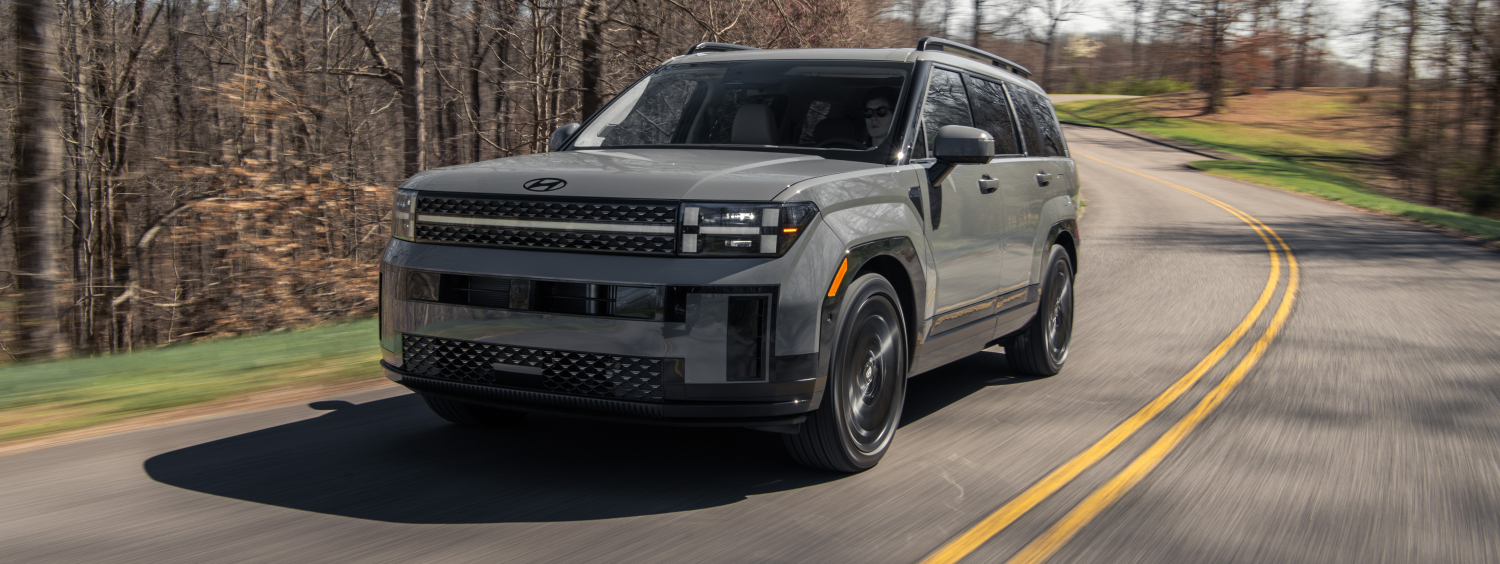
Gray Hyundai Santa Fe three-row SUV driving on a wooded two-lane road
The Hyundai Santa Fe adds a third row and up to 4,500 pounds of towing on the XRT. Photo: Hyundai Motor America.

Cabin Space, Cargo, and Third-Row Seating

The Tucson seats five with a generous 41.3 inches of rear legroom. That's plenty for a couple, a small family, or a daily carpool from Madison. Its cargo area holds 38.7 cubic feet with the rear seat up and 74.8 cubic feet with it folded.

The Santa Fe seats up to seven. Its 50/50 split third row offers 14.6 cubic feet of cargo space behind it, and you can fold both rows for 79.6 cubic feet. Upper trims offer second-row captain's chairs, which make it easier to reach the third row. SEL and higher trims also add USB ports in the third row, so everyone can charge a device on longer drives.

Not sure a new three-row SUV fits your plans? Our used Hyundai inventory often includes both models.

Fuel Economy and Tech: What You Get Either Way

Both SUVs offer a 1.6-liter turbo hybrid, and both are efficient. The Tucson Hybrid is EPA-rated at up to 38 mpg combined, and the Santa Fe Hybrid is rated at up to 36 mpg combined. With gas engines, the Tucson reaches 28 mpg combined with front-wheel drive, and the Santa Fe 2.5T reaches 24 mpg.

The Tucson also offers a Plug-in Hybrid with 268 total system horsepower and more than 30 miles of electric-only range. That's enough for many round-trip commutes without using gas.

Standard tech on both includes:

  • A 12.3-inch touchscreen
  • Wireless Apple CarPlay and Android Auto
  • Hyundai SmartSense features like Forward Collision-Avoidance Assist and Blind-Spot Collision Warning
  • Hyundai's 10-year/100,000-mile powertrain limited warranty

Our Hyundai finance center can compare payment options on a Tucson and a Santa Fe side by side.

Who Each SUV Is Built For

The Tucson fits drivers who want strong fuel economy, a manageable size, and room for five. It's a smart pick for commuters and small families.

The Santa Fe fits growing families, frequent road-trippers, and anyone who tows a boat. If a drive to Athens for a ball game means six passengers, the Santa Fe is the one.

Think about the next few years, not just this one. A growing family, a new boat, or a longer commute can change what you need. Plenty of shoppers who start with the Tucson move up to the Santa Fe for the third row, and plenty of empty-nesters go the other way for the better fuel economy. Driving both on the same day makes the difference clear.

Frequently Asked Questions

What is the difference between the Hyundai Tucson and Santa Fe?

The Tucson is a compact SUV that seats five, and the Santa Fe is a midsize SUV that seats up to seven. The Santa Fe offers more power, a third row, and more towing capacity. The Tucson offers slightly better fuel economy and a Plug-in Hybrid option.

How much can the Hyundai Santa Fe tow?

The Santa Fe with the 2.5-liter turbo engine can tow up to 3,500 pounds when properly equipped. The Santa Fe XRT tows up to 4,500 pounds. Santa Fe Hybrid models are rated for up to 2,000 pounds.

Does the Hyundai Tucson have a third row?

No. The Tucson seats five in two rows. If you need a third row, the Santa Fe is the better fit, with seating for up to seven.

Is the Tucson Hybrid or Santa Fe Hybrid more fuel efficient?

The Tucson Hybrid is slightly more efficient, with an EPA rating of up to 38 mpg combined. The Santa Fe Hybrid is rated at up to 36 mpg combined. Both use a 1.6-liter turbo hybrid with 231 total system horsepower.

Where can I test drive a Tucson and Santa Fe in Huntsville?

You can drive both at Bentley Hyundai, 3805 University Drive in Huntsville. Call 256-713-0505 to schedule a visit, and we'll have both models ready so you can compare them on the same roads.

Compare Them in Person at Bentley Hyundai

When you weigh the Hyundai Tucson vs. Santa Fe, start with seats and towing. If five seats and great mpg cover your life, the Tucson is a strong fit. If you need seven seats or plan to pull a boat, the Santa Fe is worth the step up. Get to know Bentley Hyundai, then visit us at 3805 University Drive or call 256-713-0505. We'll set up both SUVs so you can drive them back to back.

Recommended Posts

New tires

Keep Your Tires Cool This Summer

Summer Tire Care: How to Keep Your Tires Safe and Road-Ready All Season When the summer sun is out and temperatures climb, it's time to get your vehicle ready for the heat. Most drivers think about engine maintenance and air conditioning this time of year, but it's just as important not to overlook the only part of your car that actually touches the road: your tires. Good summer tire care keeps you safe and gives you a smoother, more comfortable ride. Hot pavement, long road trips and heavier loads all put extra stress on your tires. Here are some key tips to keep them in top shape all summer. 1. Check Your Tire Pressure Often Heat has a direct effect on tire pressure. For every 10°F rise in air temperature, tire pressure goes up by about 1 PSI. On a summer afternoon, the road surface can be much hotter than the air, which adds even more pressure and stress. Both overinflated and underinflated tires cause problems: Underinflated tires flex more, build up heat and wear faster on the outer edges. They are also the leading cause of tire blowouts, which are most common in hot weather. Overinflated tires touch less of the road, so you get less grip, longer stopping distances and a harsher ride. How to do it right: Check pressure at least once a month and before any long trip. Check when the tires are "cold," meaning in the morning or after the car has sat for at least three hours. Use the recommended PSI on the sticker inside the driver's door jamb or in your owner's manual. Don't use the maximum pressure printed on the tire sidewall. Don't let air out of hot tires. The pressure will drop back to normal as they cool. 2. Inspect Your Tread Depth Tread is what gives your tires grip, especially during sudden summer thunderstorms. Worn tread raises your risk of hydroplaning on wet roads. The penny test: Put a penny into the tread groove with Lincoln's head facing down. If you can see the top of his head, your tread is at or below 2/32", the legal minimum in most states, and it's time for new tires The quarter test: Try the same thing with a quarter. If you can see the top of Washington's head, you're below 4/32", which is the point where wet-road grip starts to drop noticeably. Start shopping for replacements. Tread wear indicators: Most tires have small raised bars molded into the grooves. When the tread wears down flush with these bars, the tire needs to be replaced. 3. Look for Signs of Damage Heat speeds up the wear on rubber and makes existing damage worse. Take a few minutes to walk around your vehicle and look for: Cracks in the sidewall or between the tread blocks Bulges or blisters, which can mean internal damage and a high risk of blowout Nails, screws or other objects stuck in the tread Uneven wear, which can point to alignment, suspension or inflation problems If you see a bulge or deep cracking, don't wait. Have the tire checked by a professional right away. 4. Rotate and Balance Your Tires Regular rotation helps your tires wear evenly, which makes them last longer and keeps handling predictable. Most manufacturers recommend rotating every 5,000 to 7,500 miles, and many drivers do it with every oil change. Early summer is a good time to schedule a rotation and balance before road-trip season starts. 5. Get an Alignment Check Potholes left over from winter can knock your wheels out of alignment. Watch for these signs: Your vehicle pulls to one side Your steering wheel is off-center when driving straight The inside or outside edges of your tires are wearing unevenly A proper alignment protects your tires, helps your fuel economy and makes your car easier to steer. 6. Don't Overload Your Vehicle Summer usually means packed trunks, roof carriers, bikes and campers. Every tire has a maximum load rating, and going over it causes extra heat and a higher chance of tire failure. Look up your vehicle's payload and towing limits on the door jamb sticker or in your owner's manual. If you're carrying a full load or towing, you may need to adjust your tire pressure to the recommended level for heavy loads. 7. Don't Forget the Spare Your spare is easy to forget until you need it. Before a long drive, check that it's properly inflated and in good condition. Also make sure your jack and lug wrench are in the vehicle and working. 8. Choose the Right Tires for the Season If you still have winter tires on, it's time to switch. Winter tires use a softer rubber that wears out quickly on hot pavement, and they don't brake or corner as well in warm weather. A good rule of thumb is to switch once temperatures stay above 45°F. For drivers who care about performance, dedicated summer tires give you better grip, sharper handling and shorter stopping distances on both dry and wet roads. All-season tires are a solid, practical choice for most everyday drivers. 9. Protect Your Tires from the Sun UV rays and heat break down rubber over time. When you can, park in the shade or a garage. If a vehicle or trailer will sit for a long time, tire covers can help slow sidewall cracking. Also keep in mind that tires age even if they have plenty of tread left. Most manufacturers recommend replacing tires after six to ten years, no matter how much they've been driven. Frequently Asked Questions How often should I check my tire pressure in the summer? At least once a month and before every road trip. Checking every two weeks is even better during heat waves. Is it normal for tire pressure to rise in hot weather? Yes. Pressure goes up about 1 PSI for every 10°F increase in temperature. Always set your pressure when the tires are cold. When should I replace my tires? Replace them when the tread reaches 2/32". For better safety in wet weather, consider replacing them at 4/32". You should also replace tires that show bulges or deep cracks, or that are more than six to ten years old. Can I use winter tires in the summer? It's not recommended. Winter tires wear out quickly in the heat and don't handle or brake as well on warm, dry roads. Stay Safe on the Road This Summer A few minutes of tire care can prevent a roadside breakdown, extend the life of your tires and keep you and your passengers safe all season. If you're not sure about the condition of your tires, or you're due for a rotation, alignment or new set, schedule a visit with a trusted service center before your next summer adventure.